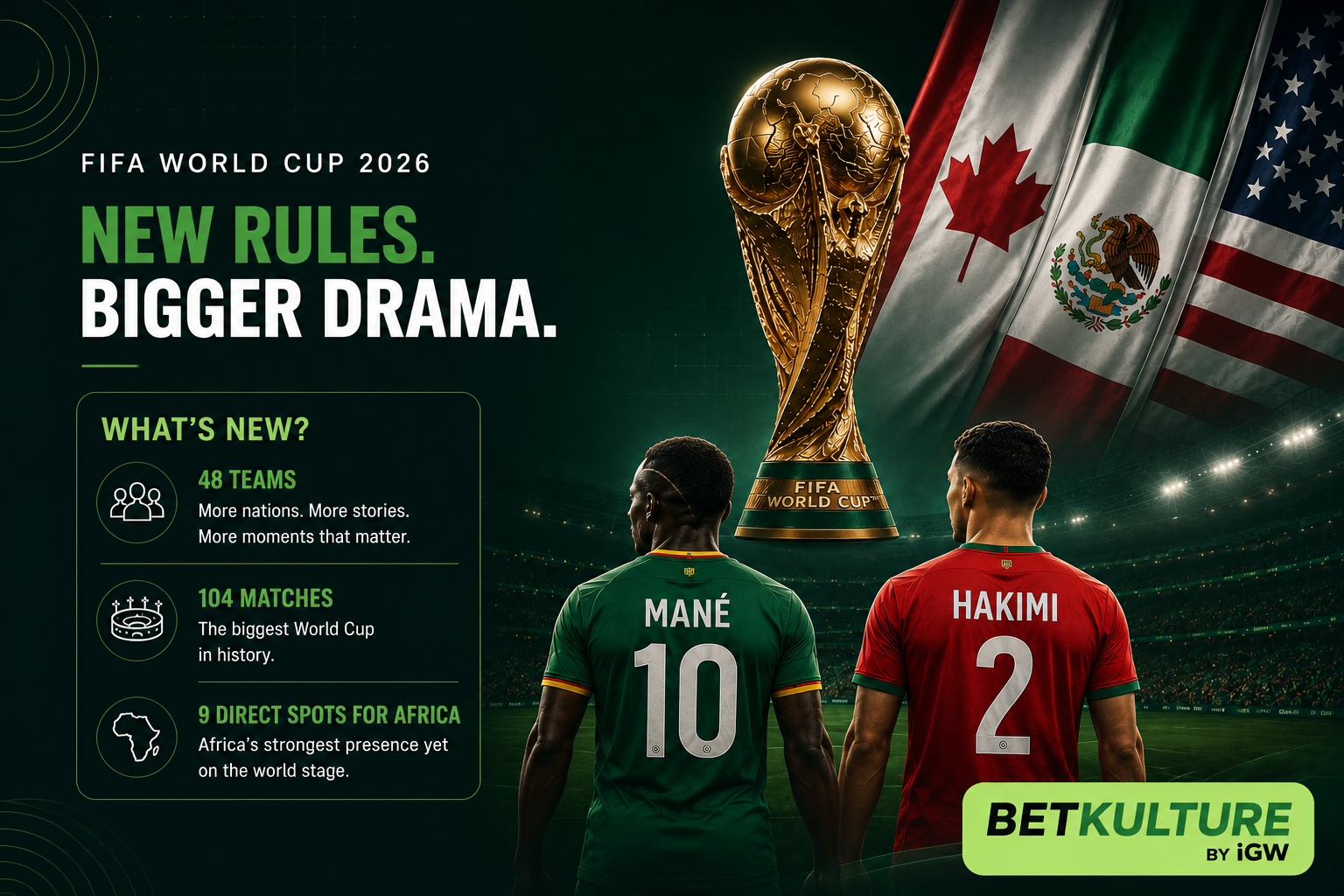
If you haven’t heard, FIFA has made new rules for the 2026 World Cup setup, basically shaking the whole table. For the first time, 48 national teams will compete across Canada, Mexico, and the United States. That’s 16 more teams than the usual 32, pushing the total number of matches up to 104.
As you’d expect, this means more matches and drama. If you are an African fan interested in betting on the upcoming World Cup, you should know exactly how this works before kick-off.
Why did FIFA make this change?
The big idea behind FIFA’s 2026 changes is inclusion. In his speeches, FIFA President Gianni Infantino said that opening the tournament to more African and Asian nations gives more countries a chance to shine on the world stage. In his words, more countries, more joy, more diversity and more stories.
Also, the tournament presents more chances for teams outside the usual heavyweights to show up on the world stage. For example, Africa now gets nine direct qualification spots, which makes the 2026 FIFA World Cup especially important for football fans. The continent historically secured a 10th spot after DR Congo won the intercontinental play-offs.
How the new World Cup format works
With the new Round of 32, eight of the 12 best third-placed teams will advance, but how will they be chosen? Points will surely come first, so wins and draws will add up. But in a tournament this wide, more than eight third-placed teams could easily finish with similar records.
For clearer understanding, FIFA has created these rules to determine who qualifies from the group stage:
Points will surely be calculated. The number of wins or draws will add up.
If more than 8 teams meet the minimum points, then goal difference is also an option. Surely not every team will have the same number of goals scored or conceded?
There’s also something called team conduct score, and this means a lot. With this new rule, yellow cards and red cards can minus a team’s points!
Yellow = -1 point; 2 yellows = red = -3 points; and direct red card = -4 points!
This is why a player’s good conduct, or lack thereof, can potentially decide if their team progresses.
Group stage becomes unpredictable for 2026 tournament
When multiple third-placed teams are compared across groups, small margins matter more than ever. Points will come first, but that won’t always be enough.
Tie-breakers will likely include:
Goal difference
Goals scored
Head-to-head records (where applicable)
Fair play points (discipline records)
Yellow cards, red cards, and overall discipline can push a team up or down the rankings when everything else is tight. In a format this wide, small mistakes carry more weight than usual.
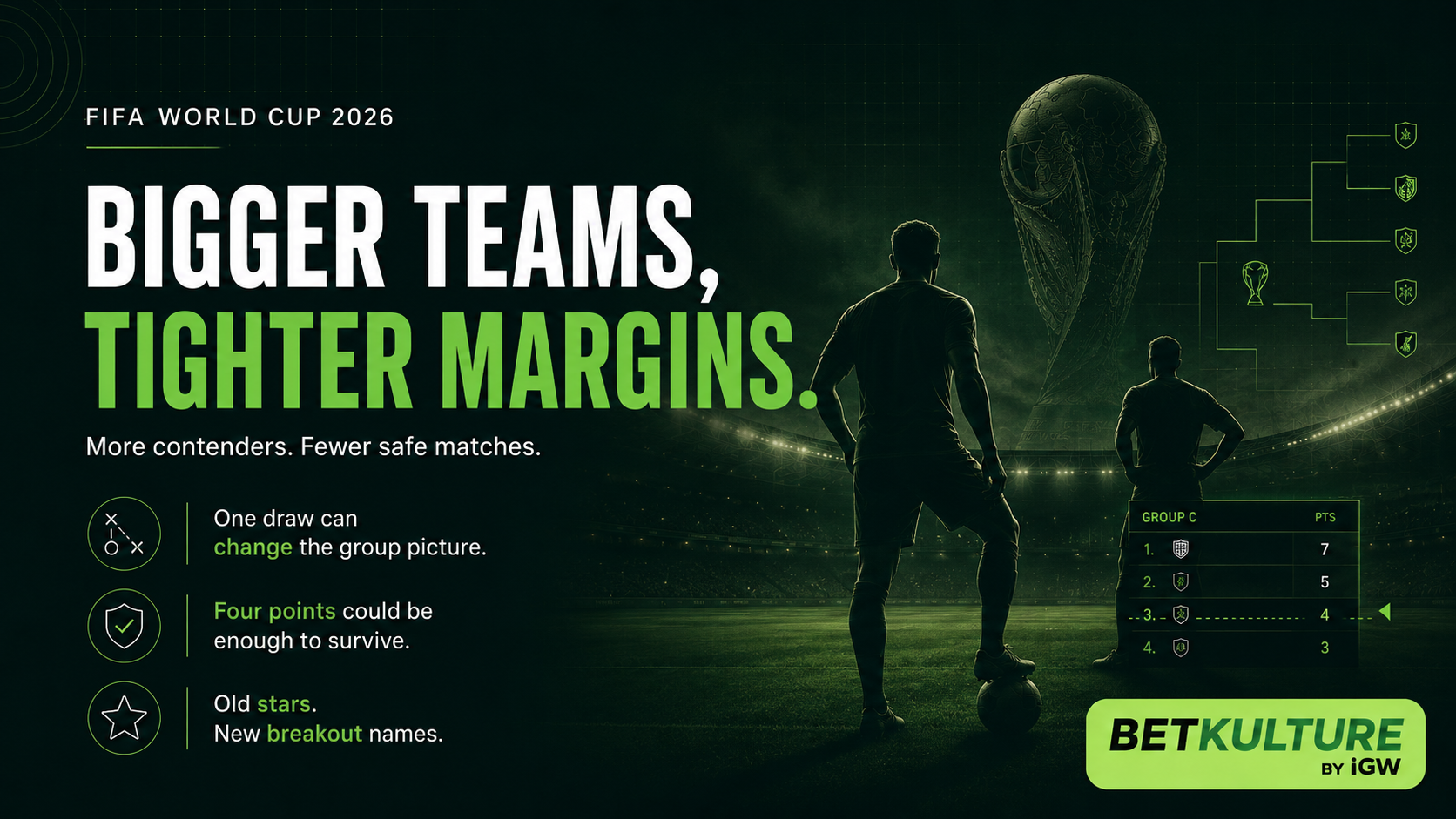
Bigger teams, tighter margins
On paper, the traditional powerhouses like France, Brazil, Argentina, England, and Portugal are likely to dominate the competition. But this new structure changes the pressure.
There are now more teams capable of disrupting group standings, and fewer “safe” matches. One unexpected draw or loss can shift the entire qualification picture. So, teams might favour defending deep and grinding out wins over expansive football.
Four points will likely be enough to survive the group stage depending on the quality of the opposition. The margin between success and failure is much thinner at this tournament.
The expanded format also opens the door for new players and emerging teams to make a name. While stars like Ronaldo, Messi, and Neymar are playing their final World Cup, a lot of young talents will see the 2026 FIFA World Cup as their breakout moment.
Africa’s strongest ever presence at the FIFA World Cup
A record 10 African teams have qualified for the 2026 World Cup. Recently archrivals, Morocco and Senegal, are the top two teams from the continent, but we also expect surprises from historic teams like the Black Stars of Ghana.
The question is on everyone's lips is whether Africa can move from happy visitors to contenders. With increased African presence at the tournament, fans will expect one or more teams to progress deep into the knockout rounds.
Outside the continent, there are also more teams with a point to prove. This means we might witness shocking results throughout the World Cup. So, before placing any bets, it is important to understand the group path, head-to-head history among teams, and player form. But you don't have to sweat over analysing these stats. Our Betting IQ and Shepherd Signals sections have you covered till the tournament is over.
Final Takeaway
There are mixed feelings around FIFA’s decision to expand the 2026 World Cup. Yet it has the potential to become a historic competition. More teams means more chances of upsets and we are sat for it.
If you seek a perfect blend of football knowledge and betting intelligence, follow our pages for more updates from BetKulture by iGW.