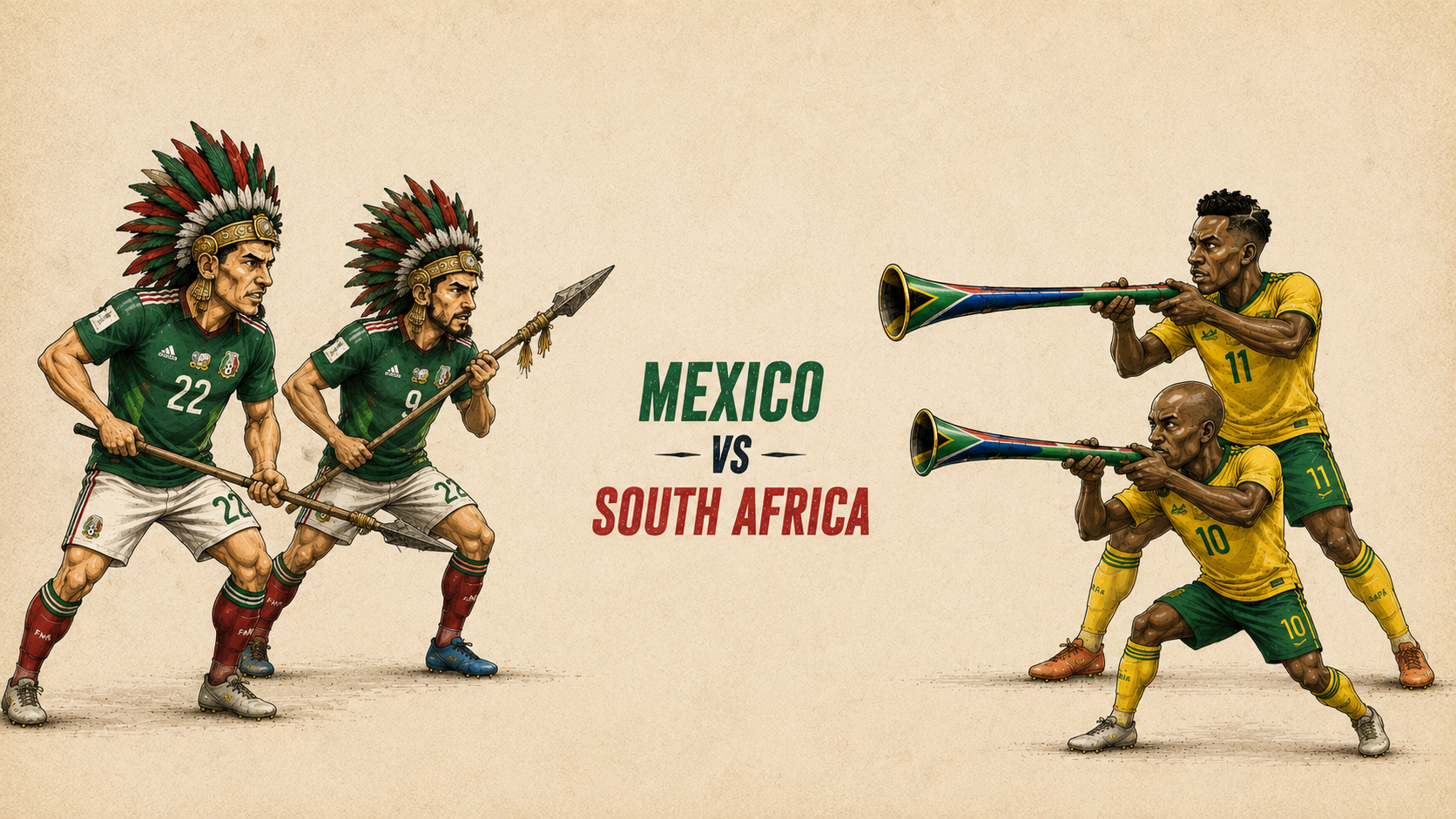
Match Result: Mexico 2-0 South Africa
Mexico and South Africa produced a dramatic World Cup opener at Mexico City Stadium, with the co-hosts winning 2-0 in a match shaped by early pressure, defensive errors, and three red cards.
The result challenged Shepherd’s strongest pre-game signal, which leaned toward the draw if South Africa stayed compact and survived the early pressure. Instead, the game tilted early because of a defensive breakdown, then moved even further away from Bafana Bafana after the red cards.
Mexico deserved credit for starting with intent. They used the crowd, forced South Africa into rushed decisions, and punished the first major mistake of the night. South Africa, meanwhile, never built enough attacking rhythm to make Mexico uncomfortable for long spells.
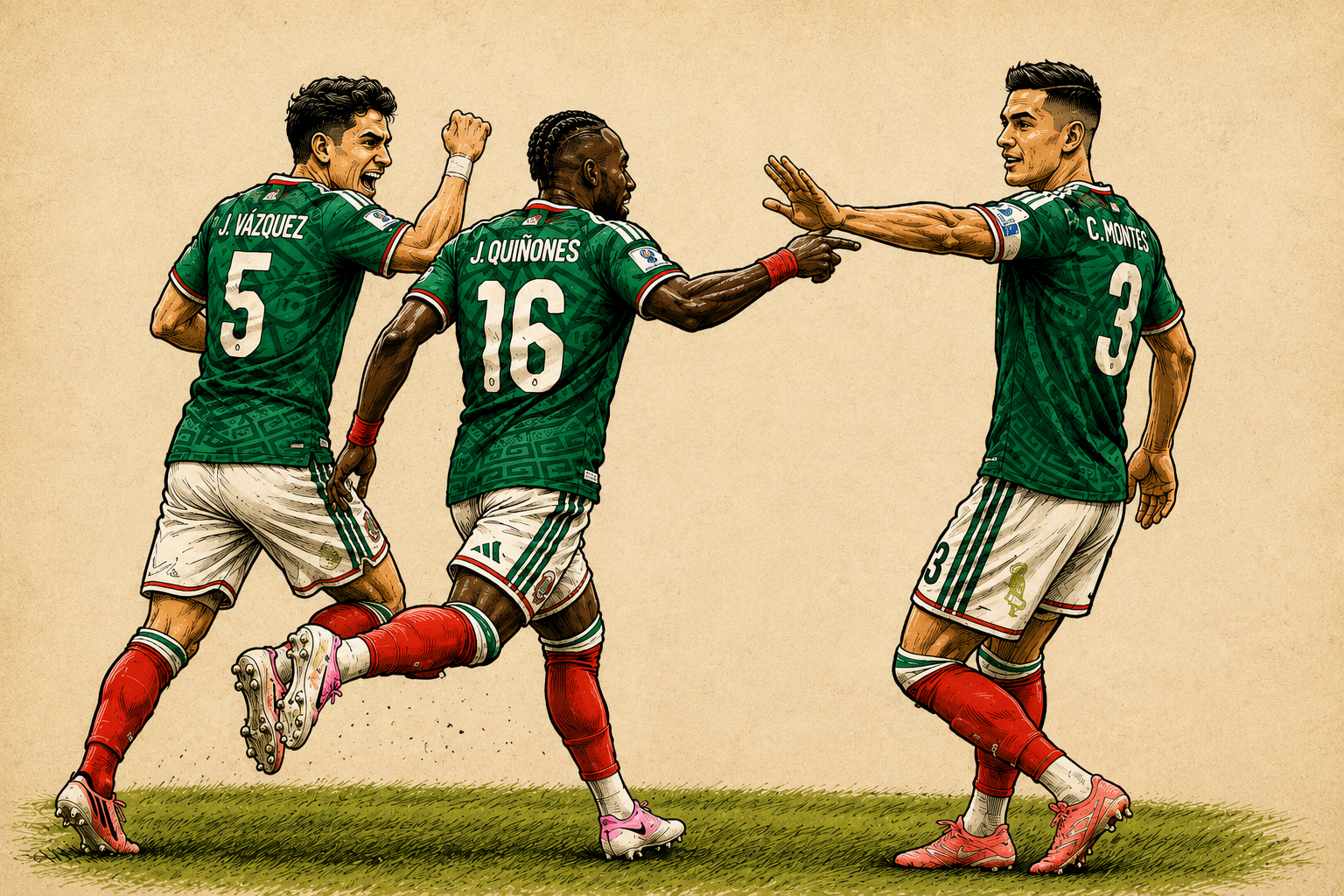
Goal Moments and Key Breakdowns
The opening phase belonged to Mexico. They started with the tempo expected from a home team in a World Cup opener, with the crowd pushing every attack and every duel.
Mexico pressed South Africa’s buildup, moved the ball quickly into wide areas, and looked sharper in second-ball situations. South Africa’s plan appeared clear enough: stay compact in a 5-3-2 shape and slow Mexico’s game. But that plan collapsed too soon.
The first goal came from exactly the kind of risk highlighted before kick-off. South Africa needed clean defensive decisions under pressure, but a loose buildup sequence put the back line in trouble. Julian Quiñones reacted calmly and finished well to give Mexico the lead.
The second major shift came after South Africa were reduced to ten men. Sphephelo Sithole’s red card damaged their ability to compete through midfield and made the draw route much harder to sustain.
Mexico then used the extra man well. Raul Jimenez made it 2-0 with a strong header into the near post after good delivery from the right.

South Africa’s night became worse when Themba Zwane was sent off late for violent conduct after a VAR review. At that point, any dream of a comeback was gone. Cesar Montes was also dismissed in stoppage time, which slightly balanced the game.
BetKulture Betting Markets Review
1. Draw as the Main Focus
This angle failed because South Africa lacked the discipline to play through the press and clear their lines. The early goal and red cards broke this bet.
2. Under 2.5 Goals as an alternative
This reading held up. Even with Mexico in control and South Africa reduced to nine men, the game did not move beyond two goals.
3. Draw and Under 2.5 Goals as an accumulator
This failed because the draw condition disappeared early. The under 2.5 part survived, but the combination showed why conditional angles are fragile. One early defensive error was enough to void the bet.
Shepherd Insights Recap
Shepherd Metric | Mexico | Draw | South Africa |
Actual Probability (AP%) | 33.33% | 33.33% | 33.33% |
Event Outcome (CP%) | 23.33% | 61.67% | 15.00% |
Market View (MIP%) | 69.93% | 21.98% | 10.87% |
Value Radar (OPA%) | -46.60% | 39.69% | 4.13% |
Outcome Certainty (PS) | 3.5 | 3.5 | 3.5 |
Indicator | Mid Chance | High Chance | Low Chance |
How Did the Pre-Game Signals Perform?
Before the game, Shepherd’s Event Outcome metric gave the draw the strongest signal at 61.67%. The final result did not validate that outcome, but the match still showed why the draw signal existed.
The model was reading the possibility of a tight contest if South Africa stayed organised. That condition did not hold. Once Mexico scored early and South Africa later lost a player, the original match shape became difficult to maintain.
The low certainty score of 3.5 was important. It warned that this was not a stable prediction environment. The game confirmed that volatility. A defensive mistake, a red card, and another late dismissal completely changed the structure of the match.
The market’s strong lean toward Mexico was ultimately rewarded, but it was not a clean tactical walkover from the first minute to the last. El Tri were helped by South Africa’s errors and discipline issues.
When Did the Match Turn?
The match turned with the first goal. South Africa’s pre-game path depended on staying level long enough to frustrate Mexico. Once Quiñones scored, the game moved into Mexico’s preferred emotional space.
The second turning point was Sithole’s red card. At 1-0, South Africa still had a route back into the match. With ten men, that route became narrow. With nine men after Zwane’s red card, it disappeared almost completely.
A model can identify risk, but football is still defined by moments. South Africa did not lose only because Mexico was better. They lost because they lacked composure.