What Do Betting Odds Mean?
Of all sports betting terms, odds are one of the most common, and probably a concept every African punter must understand before using any bookmaker site. Odds tell you two simple things: how likely the betting site thinks something is, and how much you can get back if your bet wins.
Now, here’s the funny part. In normal talk, when we say something has high odds, we may mean it has a strong chance of happening. But in betting, it works the other way round.
The higher the odds, the less likely the result is expected to happen. This is why a correct score at 40.00 looks very sweet, but you should know it is not easy to hit.
How odds multiply your possible return
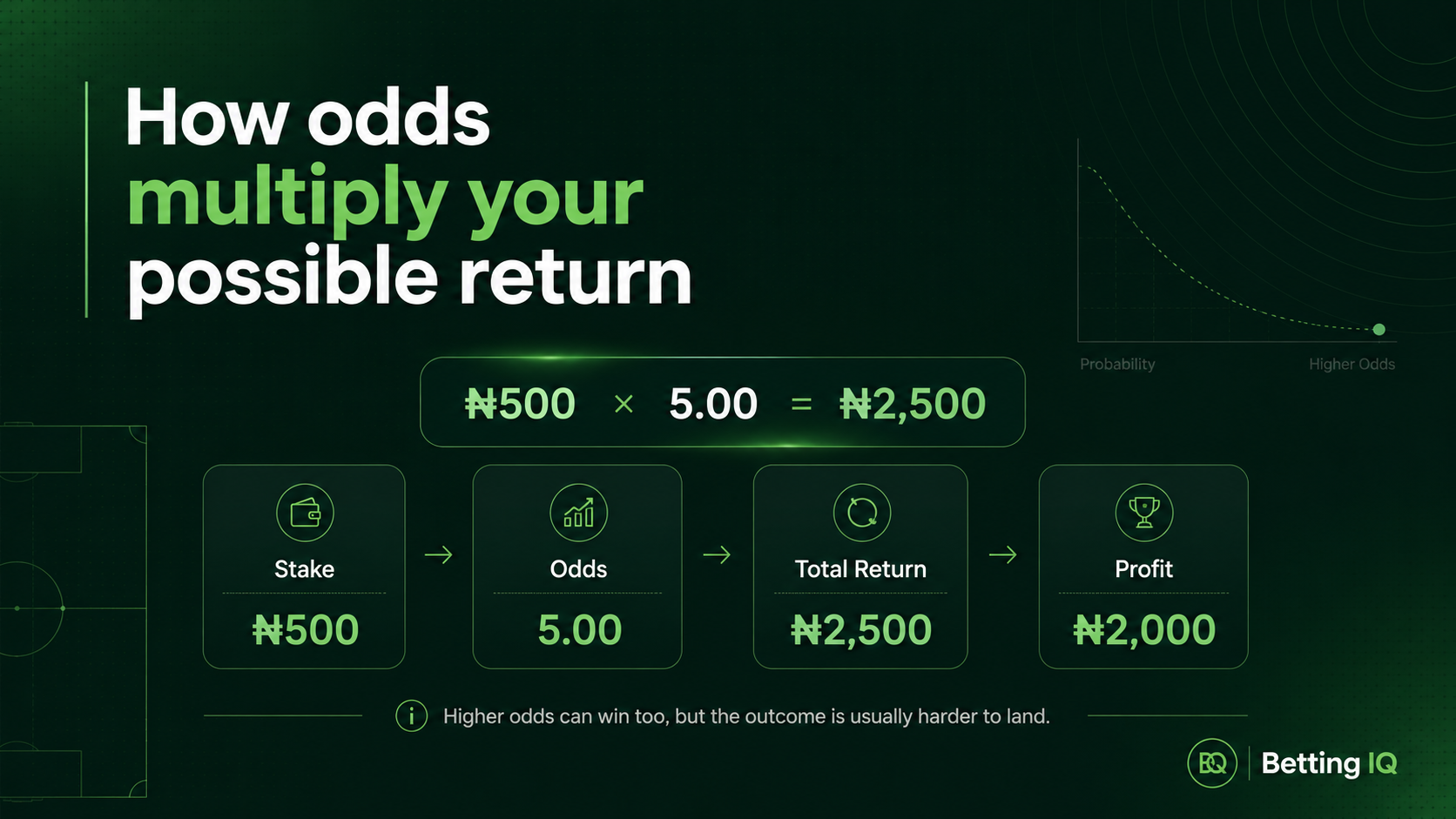
The easiest way to understand betting odds is to see them as multipliers. Forget all the big grammar for a second. If the odds are 5.00, it means your total return can be five times what you staked.
So, if you stake ₦500 at 5.00, your possible return is ₦2,500. That money includes your original ₦500, so your real profit is ₦2,000.
That’s why low odds mean the result is more expected, while high odds mean the result is less expected. Low odds can still disappoint you, of course, because football outcomes are often unpredictable. High odds can win too, but it is usually harder to land the outcomes.
Betting odds example using football
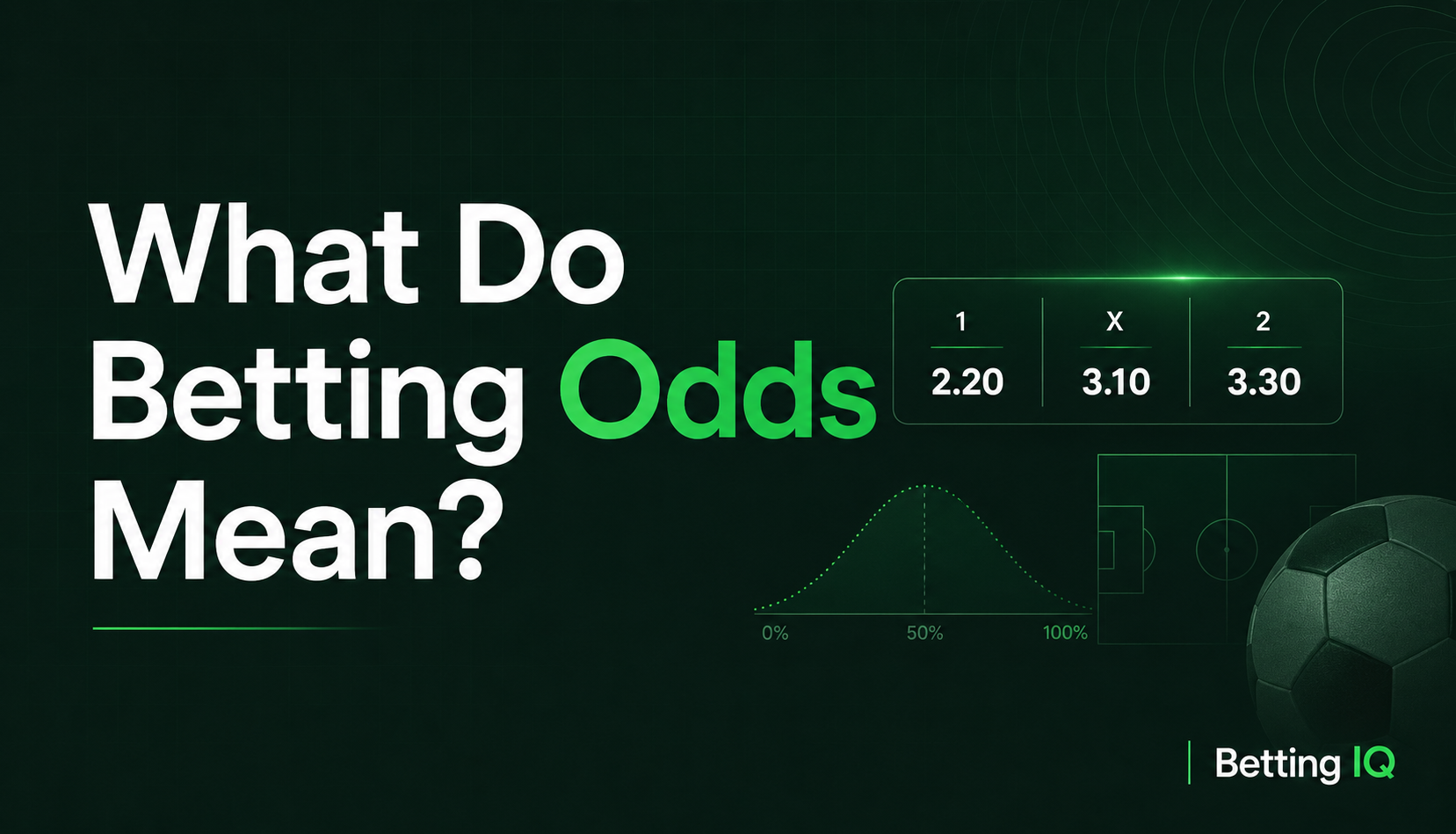
Let’s say Senegal are playing Japan in a World Cup match. On your betting app, you may see Senegal at 2.20, Japan at 3.10, and draw at 3.30. This does not mean Senegal must win. It only means the site views Senegal as the more likely winner and will pay you less for a positive result.
If you stake ₦1,000 on Senegal at 2.20 and win, your total return is ₦2,200. This includes the ₦1,000 stake, so your profit is ₦1,200.
What happens when you add more games?
Now, let’s say you add more games to the same ticket: Senegal to win, Morocco to win, England to score over 1.5 goals, and Brazil to keep a clean sheet.
That is an accumulator. The return becomes bigger, 30.58, for example, but every single pick must win, except the betting site says otherwise. If only Brazil concedes one silly goal, the whole ticket dies.
So, odds can show a possible return, but they don’t protect you from football nonsense.
Common misconceptions about betting odds
The biggest mistake many bettors make is thinking high odds automatically mean better value. They do not, even though you can earn a lot if you win. A team priced at 8.00 to win should tell you the betting site simply thinks the team is very unlikely to win.
Another mistake is relying heavily on favourites. A team priced at 1.30 can still draw or lose. For instance, Manchester City drew 3-3 against Everton in their last EPL encounter despite being favoured to win. A team with great players might not always win against weaker teams.
So, while odds are useful, it is essential to know that you can lose whether they are high or low. You should think of them as the probability in price form, but they do not guarantee wins. What you need is a good understanding of the teams, a football fan instinct, and a punter’s edge.
Responsible betting starts before you stake
Every bet still carries the chance of losing. The higher the odds, the more likely.
Responsible betting means deciding what you can afford to stake before placing anything, knowing that your chances of winning are never 100%.
Read the odds, then do your math
In simple terms, odds are the sportsbook’s way of saying, “This is how we see this match going, and this is what we’ll pay if you’re right.” Low odds mean low returns but with a higher chance of winning. Conversely, high odds mean higher returns, but lower chances of winning.
So here’s what you should do: analyse the odds and find markets with a higher winning chance. This means calculating the chances of the team winning, not necessarily looking at the odd value.
Do your math first, then compare with the odds on the operator's site. Always bet responsibly.