Probability vs Prediction: What African Bettors Should Know
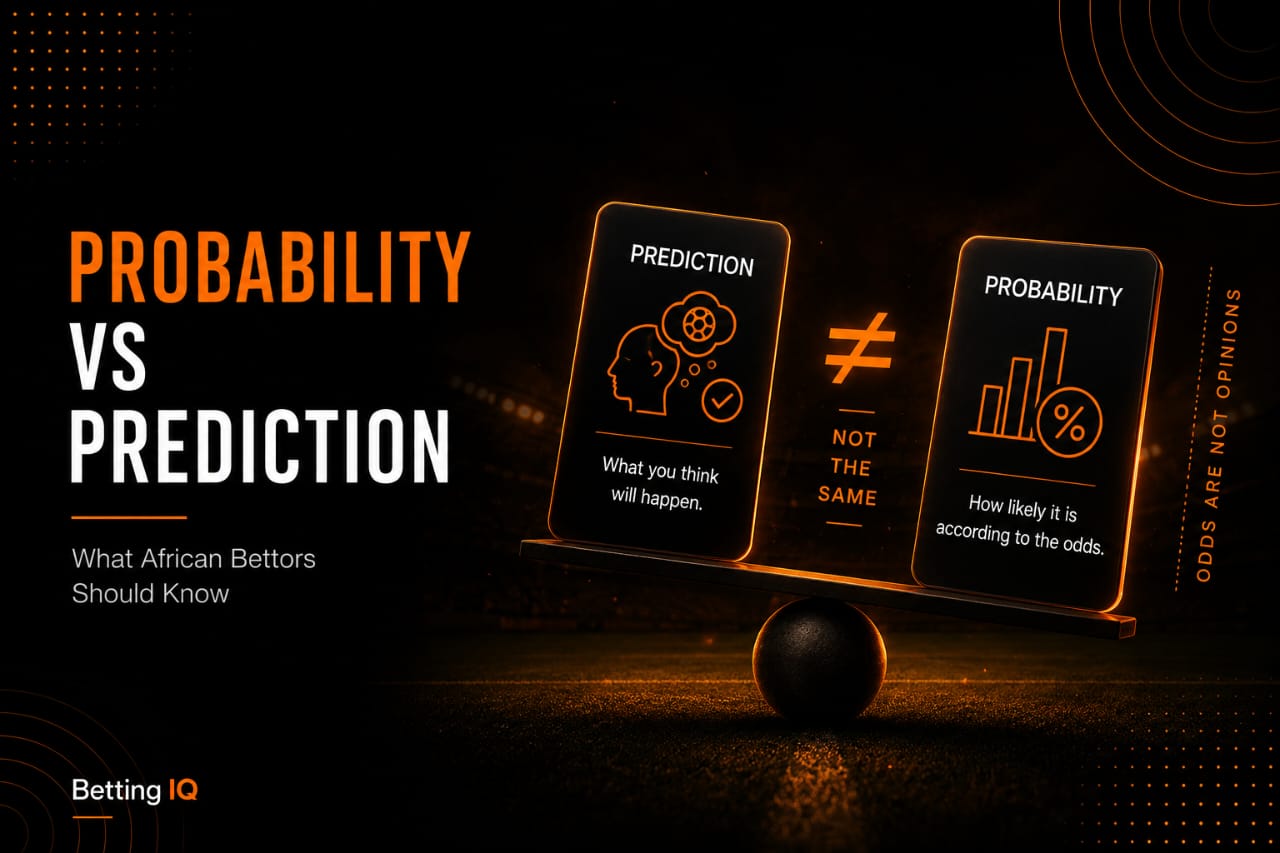
If you think Morocco will win a World Cup match, it’s a prediction. However, when a sportsbook prices Morocco at 1.80 to win, it’s expressing the probability as odds. That’s the primary difference between a prediction and a probability.
The two concepts aren’t the same
, and it’s an error to treat them as if they are. In the World Cup, each match is significant, and you’ll see a lot of tipster content everywhere. So, it’s crucial to understand the gap between what you believe will happen and what the odds say.
Prediction vs Probability: Understanding the Difference
We can describe a prediction as a personal judgment about what will occur in a match. Most times, you make it based on the games you’ve watched, the content you’ve read, and the team or player you support. Probability is much different because it’s a numerical expression of the likelihood of an outcome.
On betting sites across Africa, the probabilities are just odds. When you look at the odds, you’ll be able to tell how likely the event will happen, independent of your own views. That said, the odds don’t always capture the true probability, and leveraging those gaps is what is known as value betting.
Football Betting Example
Let’s take a look at the odds of South Africa’s opening game against Mexico:
Mexico to win: 1.48
Draw: 4.59
South Africa to win: 7.97
Now, the 7.97 for Bafana Bafana means the team has a 12.55% probability of winning. Meanwhile, it’s 21.79% for a draw and 67.57% for the host nation. These likelihoods are tied to the odds, regardless of what your personal predictions are.
You may be wondering how to calculate probability from odds. Well, it’s simple: divide the odds by 1 and multiply by 100. So, for the draw, we have 1/4.59, which is 0.2179; multiply 0.2179 by 100, and you get 21.79%. As the numbers show, the lower the odds, the higher the probability, and vice versa.
Common Misunderstanding
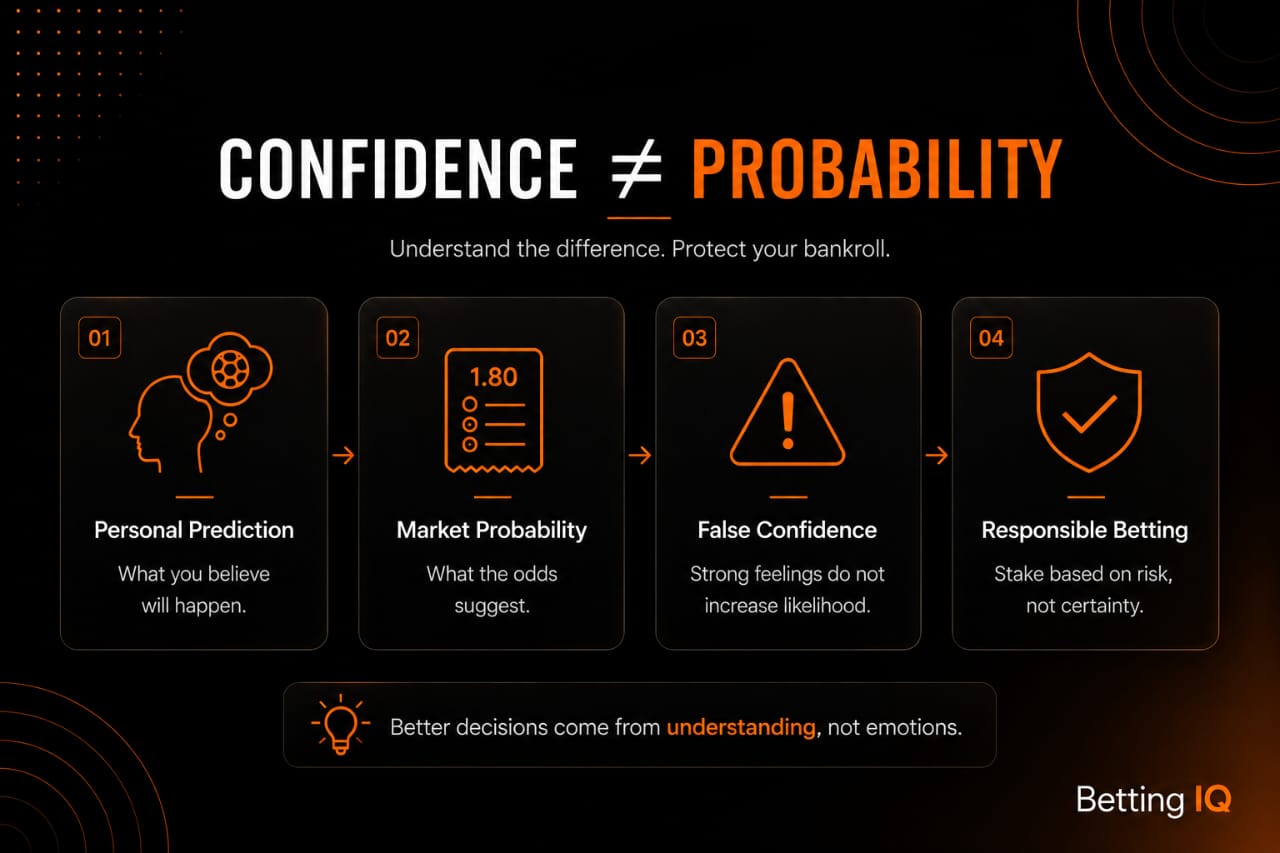
Some bettors take their ‘confident’ predictions to be a high probability of winning. However, that’s not true. You can be certain an outcome will happen and still back a low-probability event, because confidence is just a feeling.
Probability is a mathematical measure, so it doesn’t depend on vibes. Even if a tipster predicts with authority, they’re not working with a verified likelihood. In our opinion, the odds on the market are the most transparent indicators of probability, even if they’re also not always 100% correct.
The Dangerous Trap of Betting With Confidence Alone
If you confuse prediction with probability while betting, you’re taking on a higher financial risk. It’s not always visible until after the loss, though, as you’ll be sure of your picks. When such bets don’t play out, the frustration is often stronger.
One way to stay responsible is not to place large stakes simply because you feel certain about an outcome. That’s why a golden rule is to avoid emotional bets. This applies even if you’re following odd probabilities.
Taking a responsible approach is important in the World Cup because upsets are more frequent in tournament football. In the 2022 edition, for example, Saudi Arabia beat Argentina in their first group stage match. Neither bettor's predictions nor sports betting odds expected such an outcome.
Why African Bettors Need to Look Beyond Booking Codes
Tipsters are common in African betting communities, and many share predictions daily. Most post what they tag ‘sure bets’ with booking codes on WhatsApp, Telegram, X (Twitter), and other platforms.
When many punters are backing the same event, it almost feels like it’s bound to happen. Sometimes, if you don’t want to bet, the social peer pressure can push you to. In such situations, always factor in the difference between prediction and probability. You should evaluate each selection carefully before placing a bet.
The One Question to Ask Before Placing Any Bet
To sum up, a prediction is what you think will happen, while a probability is how likely it is to occur. The latter are often the odds on your betslip. If the prediction and probability align, the bet becomes straightforward. However, if they point in the opposite direction, you have to carefully examine your picks before submitting. Don’t take your confidence in a prediction to be evidence of probability.